Contents:
- Overview: What Launching a Trucking Business Requires
- What You’ll Need Before You Apply
- Step-by-Step: Getting Legally Operational
- Register Your Business Entity
- Obtain Your USDOT Number
- Get Your MC Number
- Secure Required Insurance
- Complete a BOC-3 Filing
- Set Up IFTA and IRP Registration
- Trucking Authority vs. Leasing On With a Carrier
- A Real Example
- Seasonal Timing to Consider
- Frequently Asked Questions
- How much does it cost to start a trucking business in 2026?
- Do I need an MC number if I only drive within one state?
- How long does it take to get FMCSA authority approved?
- Can I start a trucking business without owning a truck?
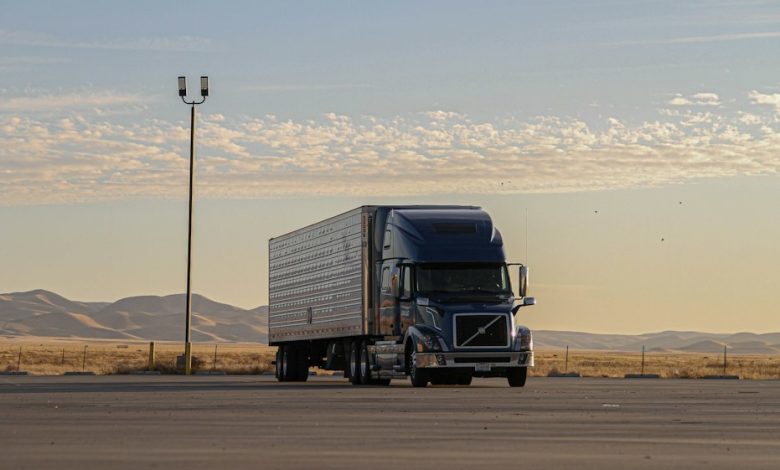
A driver sits in a truck stop parking lot outside Amarillo, calculating whether leasing on with a carrier still beats running under his own authority. This scenario plays out daily, and the answer hinges on understanding the regulatory framework before writing a single check.
Overview: What Launching a Trucking Business Requires
Starting a trucking business, whether hauling freight for hire or running a private fleet, requires federal registration through the FMCSA, proper insurance coverage, and state-level compliance. Skipping any piece halts operations before your first load, and fines for operating without proper authority start at $1,000 per violation.
What You’ll Need Before You Apply
- A USDOT number (free, required for any commercial vehicle over 10,001 lbs crossing state lines)
- Motor Carrier (MC) number if hauling for hire across state lines
- Proof of insurance meeting FMCSA minimums
- A registered business entity (LLC recommended for liability protection)
Step-by-Step: Getting Legally Operational
1. Register Your Business Entity
Form an LLC before applying for federal authority; this separates personal assets from trucking’s significant liability exposure. LLC formation runs $50-$500 depending on your state.
2. Obtain Your USDOT Number
Apply free through the FMCSA’s Unified Registration System. This number identifies your business for safety audits, inspections, and crash reports, and it’s required before you move a single load.
3. Get Your MC Number
If hauling freight for hire across state lines, you need an MC number, which costs $300 through the FMCSA. This is distinct from your USDOT number and authorizes interstate commercial operation.
4. Secure Required Insurance
FMCSA requires a minimum of $750,000 in liability coverage for general freight, rising to $5 million for hazmat. Expect $12,000-$18,000 annually for a new authority owner-operator, since insurers charge higher premiums without an established safety record.
5. Complete a BOC-3 Filing
This designates a process agent in each state you operate in, typically costing $25-$75 through a filing service, required before your MC number becomes active.
6. Set Up IFTA and IRP Registration
These handle fuel tax reporting and license plate apportionment across states you drive through, both filed through your base state’s DMV.

Trucking Authority vs. Leasing On With a Carrier
New owner-operators often confuse “running under your own authority” with “leasing on” to an established carrier, but they carry very different obligations. Your own authority means full control over rates and routes, but you shoulder all insurance, compliance, and dispatching yourself. Leasing on means operating under the carrier’s MC number and insurance, sacrificing independence for lower upfront costs and immediate freight access, often the better starting point for first-time truckers.
A Real Example
A driver in Ohio leased on with a regional carrier for eight months, building a clean safety record and saving $22,000. He then formed his LLC, secured his MC number, and found insurance at $14,000 annually, lower than a new applicant’s rate.
Seasonal Timing to Consider
Winter months (December through February) see higher freight rates in produce and holiday retail lanes but also higher insurance claims from weather-related accidents, which can affect renewal premiums. Many new operators find spring, particularly March and April, an easier entry point with more stable weather and steady freight demand.
Frequently Asked Questions
How much does it cost to start a trucking business in 2026?
Budget $15,000-$25,000 for authority setup, insurance down payments, and initial operating costs, not including the truck itself.
Do I need an MC number if I only drive within one state?
No, intrastate-only operations typically need just a USDOT number and state-specific permits, not an MC number.
How long does it take to get FMCSA authority approved?
Typically 20-25 business days after the BOC-3 filing and insurance are submitted, due to a mandatory federal review period.
Can I start a trucking business without owning a truck?
Yes, through leasing or financing arrangements, though lenders will scrutinize your business plan and credit history closely.